Retainer Policy on Supernatural Ability
The RookThe Retainer Policy on Supernatural Ability defines Retainers as personnel without supernatural powers, separating them from the powered individuals whom the Checquy recruits and trains. Its apparent clarity becomes a security vulnerability: after Retainers at a reception reveal bodily modifications, the Checquy’s confidence in its screening is not enough to establish that they remain unaltered. The policy is therefore tested not simply as a rule about who may serve, but as a claim that the organization can reliably know what its people are capable of.
Definition and institutional context
The policy’s stated premise is that Retainers are not powered. Shantay makes the comparison explicit: the Croatoan’s policy was modeled on the Checquy’s, and neither organization permits powered Retainers. The rule places Retainers within a wider institutional distinction between powered members and other personnel, even as the Checquy relies on expertise and service from people outside its powered ranks.
That distinction sits alongside the Checquy’s more extensive management of supernatural ability. It claims authority to recruit citizens with powers, binds recruits through oaths and contracts, and trains children at the Estate. There, pupils undergo regular, comprehensive medical testing intended to investigate the origins of their abilities, although the organization often cannot explain what the tests reveal. This evidence describes the Checquy’s approach to powered recruits rather than a full Retainer-screening procedure; it nevertheless shows the broader culture of examination and classification against which the Retainer rule operates.
The reception exposes a weakness
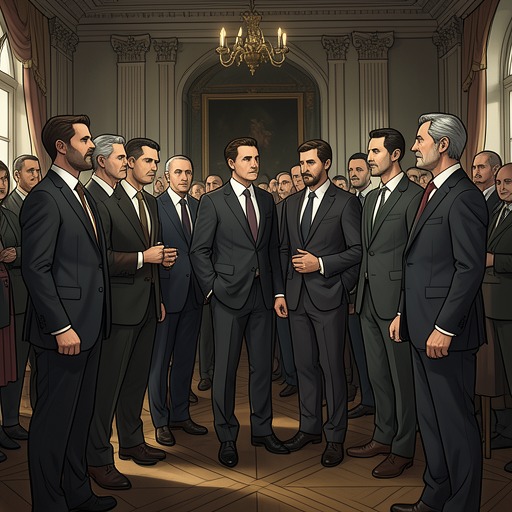
The policy comes under pressure during the Checquy reception crisis. Retainers are found carrying concealed weapons, including knives stored in pouches beneath the skin, and striking with force beyond what a normal person could manage. Myfanwy privately recognizes that her own attacker’s unusually modified musculature may be relevant, but does not disclose it at that moment. The details make the problem physical and immediate: a designation of “non-powered” does not guarantee that a Retainer’s body is ordinary or harmless.
Shantay responds by asking whether Retainers are screened closely. Security Chief Clovis insists that the Checquy examines them inside and out as thoroughly as it can. That assurance does not resolve the contradiction. Shantay reasons that the modifications must have occurred after screening, and identifies the Grafters as the people capable of deliberately changing bodies in this way. Myfanwy states the implication plainly: the Checquy has been infiltrated. The discovery turns an administrative category into evidence of a breach in the organization’s security.
Screening and its limits
The Checquy’s response is to inspect every member for Grafter implants, beginning with the Court. The screening is designed to account for the possibility that the examiners themselves might be compromised: groups of three observers are to monitor examinations until all doctors have been checked, and each test’s conclusion must be agreed upon by the organization’s doctors and a randomly selected civilian medical practitioner. Results are to be sent to thirty-five doctors around the world. The process is expected to take months and to impose a substantial burden on medical staff.
This elaborate plan also marks the limits of the policy’s assurance. Clovis acknowledges that not every Grafter agent will necessarily have implants, even though the traitors identified at the reception did. Screening can therefore begin with a concrete clue without guaranteeing that it will uncover every compromised person. The Checquy responds to a failure of trust by multiplying checks, witnesses, and independent judgments, but the evidence does not establish that the process can detect every form of modification or infiltration.
Significance
The policy’s central weakness is the gap between formal status and changing physical reality. Retainers may be classified as non-powered and screened by the Checquy, yet later intervention can make their bodies capable of actions that the classification was meant to exclude. The reception reveals that the rule is only as dependable as the organization’s capacity to detect alterations after the initial examination.
The crisis also shows how the Checquy’s methods of control shape its response: bodies become objects of repeated inspection, and institutional confidence is rebuilt through procedures that distribute responsibility among observers and doctors. The policy thus sits at the meeting point of personnel classification, bodily modification, and internal security. Its failure is not that the rule is stated unclearly, but that the Checquy cannot assume that a person’s recorded status will remain true over time.